













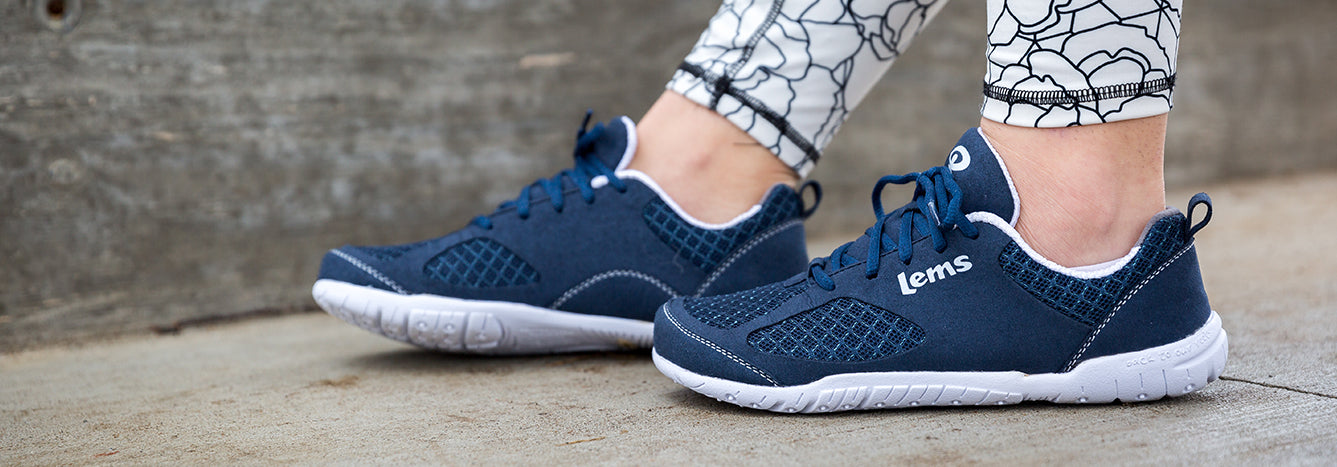

One of the most beneficial aspects to minimalist footwear can be its vast potential to help prevent common foot-related injuries and chronic pain from occurring in the first place. Natural footwear companies, such as Lems, do this by designing shoes around the shape of the human foot, rather than forcing the bare foot into an unnatural and eventually uncomfortable silhouette.
While it can take some time to transition to a low-profile, low-drop shoe, minimalist footwear may prove incredibly helpful for people who are struggling with ankle or knee pain, bunions and hammertoes, plantar fasciitis and many other issues that affect the lower limbs and feet.

WHAT FEET ARE MEANT TO DO
While genetics certainly play a part in how our feet are shaped and the likelihood of developing certain chronic conditions, our footwear choices also have an impact on foot health. For example, let’s say you’ve always had very boney, angular feet. It might sound intuitive to want to wrap those skinny feet up tight and secure them for walking, but that might not be the best choice in footwear.
Why? Well, the toes, no matter how long or short, naturally want to splay apart. It doesn’t matter if you have narrow or wide, boney or fleshy, feet. When toes are not allowed to spread apart you’re heading for trouble. Constricting your toes in a narrow shoe where they're touching the fabric creates friction points and also limits the range of motion, eventually leading to pain.

Similarly, when the foot is restrained or forced into a different angle by a shoe, each time you step down you compound that unnatural form. Now imagine making those limited foot movements in a high-impact sport like running. Strike hard too many times and at an unnatural angle or incline and the consequences can be dire. That’s why, over time, people who wear traditional shoes, whether for sport or daily life, can develop a host of chronic issues.
MAKING FEET YOUR FOUNDATION
It’s important to remember that feet are our foundation. If we build a foundation that doesn’t work with the earth beneath it, the base will eventually fail, along with body parts above it.
Often we focus on where the pain shows up — and sometimes it’s high up in our hips and knees — that we don’t realize that this discomfort could be stemming from what we’re wearing on our feet.
While it may be possible to treat some acute issues, such as plantar fasciitis with stretching and icing, over the long haul healthy footwear must be part of the conversation.

Preventing injuries and making our feet strong in the ways in which they were designed to be means replicating the way the foot falls naturally, and not by forcing it into irregular positions or propping it up with technology.
Only minimalist shoes designed around the natural curvature of the foot, with a wide toe box and little to no drop between the heel and toe, will help feet achieve the motions they are meant to make.